
Supply Contracts & Renewals
Using the Energy Action Group to Buy Gas, Electricity and Water
Does your Charity want to save money on energy costs?
Energy and water charges are significant operating costs for charities.
By joining the EAG you have the option of placing your contracts into the annual EAG Buying Basket, alongside many other like-minded organisations. The basket is tendered to a wide range of energy suppliers, selected for their overall pricing and customer services. By combining your energy consumption with others, you are able to increase the potential of your buying power.
The Basket starts on 1st August every year. This period has been chosen so we can obtain pricing during Springtime when they are historically at their lowest. By monitoring gas and electricity markets we identify favourable pricing conditions which has led to members obtaining exceptionally low rates when markets are at their lowest.
Managing energy contracts can be tedious and important dates for renewals and terminations can be overlooked if not carefully managed. As members of the EAG, we monitor and manage your renewals and terminations for you, to ensure you never get caught out.
The EAG Buying Group has been running for over 10 years.
The essentials to consider when buying energy and water.
Before starting, it is worth asking, what are energy suppliers looking for when providing prospective clients with their best offers?
What motivates Energy Suppliers to give good prices to their Customers?
Before they even get to the point of making an offer, energy suppliers will look at the sector you operate in. Suppliers are cautious about certain sectors that they regard as having a high failure rate, such as restaurants, pubs and hotels. They will scrutinise your credit score. CCJs and poor credit are reasons for rejection. They may also demand a security deposit and it is unlikely they will offer you the top rates. Even if they provide offers, they will seek insurance cover for their perceived risk, and the premium is added to the tariff which could make their offer seem expensive. However, it may be the best offer going, so don’t reject it out of hand.
If your business sector and credit score all check out, you can expect competitive prices. However, make sure you search ‘whole of market’, not just relying on a few suppliers that you have done business with in the past. There are numerous new suppliers on the market with more than 70 offering electricity alone.
Energy Contracts
Comparing Energy Contracts
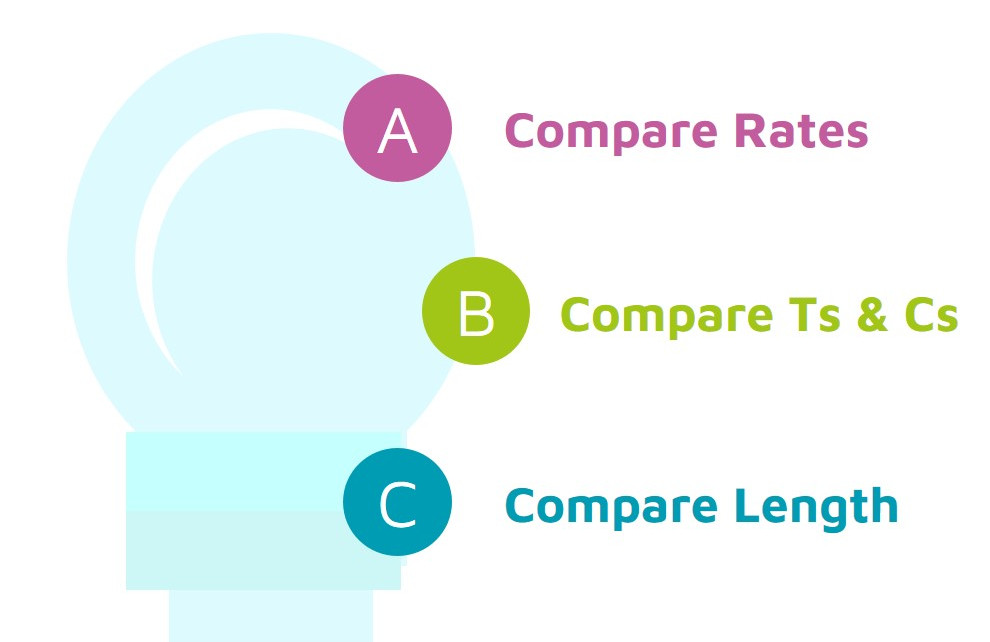
How do I compare energy offers?
Energy contracts are complicated, and it can be difficult make simple comparisons between supplier’s offers as they are often based on differing criteria.
There are fully-fixed, partially-fixed or pass-through contracts. One price if you pay by Direct Debit, and another for BACS or cheque. There are Green prices and Brown prices and shades in-between prices. Prices for supplies with Smart meters and others for Dumb meters. That very appealing price you are considering may not cover every charge and leave you at risk or retrospective costs.
A fixed or partially fixed contract means that you could incur unexpected charges during the life of the contract. They look very similar to fully fixed contracts but the tariff is lower. It is easy to get caught out and choose the wrong one.
So, the advice is to be cautious! You may think you are comparing like-for-like, but some electricity agreements do not cover 3rd party charges. Check to see if these charges are included and are fully fixed for the full duration.
Find prices for your organisation
- Commercial electricity
- Commercial gas
- Half hourly electricity
- Large gas quotations
- Green Gas
- Green Electricity
Do you need a gas or electricity contract?
What kind of contract should you be looking for?
It’s all about the level of risk you are prepared to accept.
Most charities and not-for-profit organisations are best suited to Fixed Term, Fixed Price contracts that provide long term budget certainty.
Fully fixed energy contracts
Fully fixed energy contracts should be just that. The energy element, along with all the additional charges are fixed for the term of the contract., although occasionally you may find 1 or 2 components potentially passed through. The supplier has taken the risk of bundling all costs, known and unknown, into a single package. They add a margin to cover their risk, which is why these offers are expensive. They provide peace of mind and help you establish a realistic budget.
Partially fixed and electricity contracts
The energy part of the agreement is a fixed price for the full term, but the other charges can change if 3rd party costs increase. These contracts look good on paper, but leave you open to additional charges during the life of the contract.
Flexible energy contracts
This is when all elements are flexible including the energy component. You can fix and unwind your position as market movements dictate. Flexible contracts are not recommended for SME’s.

Whole of Market Energy Prices
Make sure you get a good range of prices from a selection of energy suppliers. Some may seem highly competitive, but unless you benchmark them against their competitors, you are unlikely to obtain the best price.
Gone are the days of one size fits all!
There are a huge range of gas and electricity suppliers in the UK energy market today with more appearing on a regular basis. Most of them have a wide range of offers. Choosing the best supplier for your gas and electricity is more difficult and time consuming than in previous years.
Take care, not all offers are equal. You will need to understand the charges that are included, and those excluded, and those that can be changed during the life of the contract. You should also be aware of specific terms and conditions.
Renewable Electricity and Gas
Most charities are keen to do their part to help the environment and they recognise the urgency of cutting carbon emissions. However, there are a lot of ‘green’ offers that area green in name, but not so green in reality.
If you simply want ‘green’ branding for your business but are not too concerned about where the ‘green’ component comes from, then you have a wide selection. However, if you also want to be sure that your supplier uses renewable gas and electricity, matched against fully certificated UK renewable energy sources, then you should check the specifics.
The EAG carries out research to ensure that all ‘Green’ energy we offer, is, what it says it is. We provide fully Green gas and electricity, backed up by REGO (electricity) and RGGO (gas) certificates that guarantee the origin and conformity
Looking for 100% Green Electricity?
Looking for 100% Green Gas?
VAT on Energy for Charities
Many Charities qualify for reduced rate VAT, which also results in the elimination of the Climate Change Levy (CCL) being added to bills. This is an important exemption.
Reduced Rate VAT on electricity and gas bills Charities
Do you know you could save 15% on your business energy VAT for electricity and gas, and eliminate Climate Change Levy (CCL) altogether?
Energy Buying Frequently Asked Questions
This is a question we get asked all this time, and there is no simple answer.
The fact is that every business energy supplier is going to take a good look at your organisation before making an offer, and if they like what they see, they will work hard to make you a good offer. It’s also a fact that if they know you are speaking to a wide range of other suppliers, they will be more likely to adjust their prices to win your business.
This is one of the main considerations when considering energy contracts. You should know how your organisation is classified because it will impact many aspects on how you are treated. A Micro-Business has a number of protections that Non-Micro-Businesses do not, although they generally can’t achieve such competitive pricing.
There were 5.6 million micro- businesses in the UK in 2019, accounting for 96% of all businesses.
A non-domestic energy consumer is defined as a micro business if they meet one of the following criteria:
- employs fewer than 10 employees (or their full time equivalent) and has an annual turnover or balance sheet no greater than €2 million; or
- uses no more than 100,000 kWh of electricity per year: or
- uses no more than 293,000 kWh of gas per year.
A business using 100,000 kWh of electricity or 293,000 kWh of gas should typically pay around £10,000 – £12,000 a year for each fuel (excluding VAT and Climate Change Levy.
As a Micro-Business you can terminate your contract at any time within their contract, and suppliers must clearly state the contract end date and required notice period for fixed term contracts. As Energy Action Group Members, the EAG can terminate contracts on your behalf. This helps avoid the contract running onto out of contract rates when it finishes.
There are also rules to ensure Micro Businesses are treated fairly. These are enforced by OFGEM, the energy regulator.
As a Micro Business you will receive a Renewal Offer from your supplier around 90 days ahead of your contract end date. You should not accept this offer as it will not be competitive. You should also ensure you compare ‘whole of market’ as there will be significant discrepancies in pricing.
Non-micro businesses are not covered under the above criteria and need to be vigilant of the terms of their contract renewals.
There can be significant differences when quoting business gas and business electricity. Micro businesses can be quoted quickly. Non-micro businesses often require bespoke pricing. This can take up to 5 days with many suppliers who will analyse the details thoroughly.
Note: Business energy contracts are liable to automatic rollover terms so make certain you submit your Termination Letter to your current business energy supplier. Without termination your contract your will be placed on Deemed Rates, also known as Rollover Rates. These can be close to double your current tariff.
Suppliers send contract renewal letters to Micro Businesses but not to Non-Micro Businesses. Contract Management is part of the Energy Action Group’s member services and we can manage these processes on your behalf.
Buying energy today is more complicated than at any other time. The reasons are complex, but they mainly revolve around 3 distinct factors:
- Complex contractual arrangements.
- The rapid transition to renewables
- Predatory pricing by many third-party intermediary energy brokers.
All the above is happening at a time when charities’ cash-flow is under huge pressure.
To be sure you get the most appropriate and competitive energy contract you need to choose your options carefully. Ongoing legislation, introduced to promote the transition from carbon based generation to renewables, are levied on consumer’s bills, and non-energy costs now account for 65% of your total electricity costs and a rising percentage of gas costs.
Predatory Pricing.
A word of caution, we are seeing a continual rise in energy brokers operating predatory pricing models, unfairly targeting small and medium size organisations with large commissions and fees.
This is an important topic. We have seen a big increase in energy brokers out to make a quick buck and who pay little heed to the interests of the client. They are mainly interested in applying unconscionable commission rates for as long a term as possible.
Always compare rates from several sources. If you think you are at risk of exploitation, contact the EAG who will provide comparable prices from the whole of the market.
Energy and Water - Invoice Validation for Charities
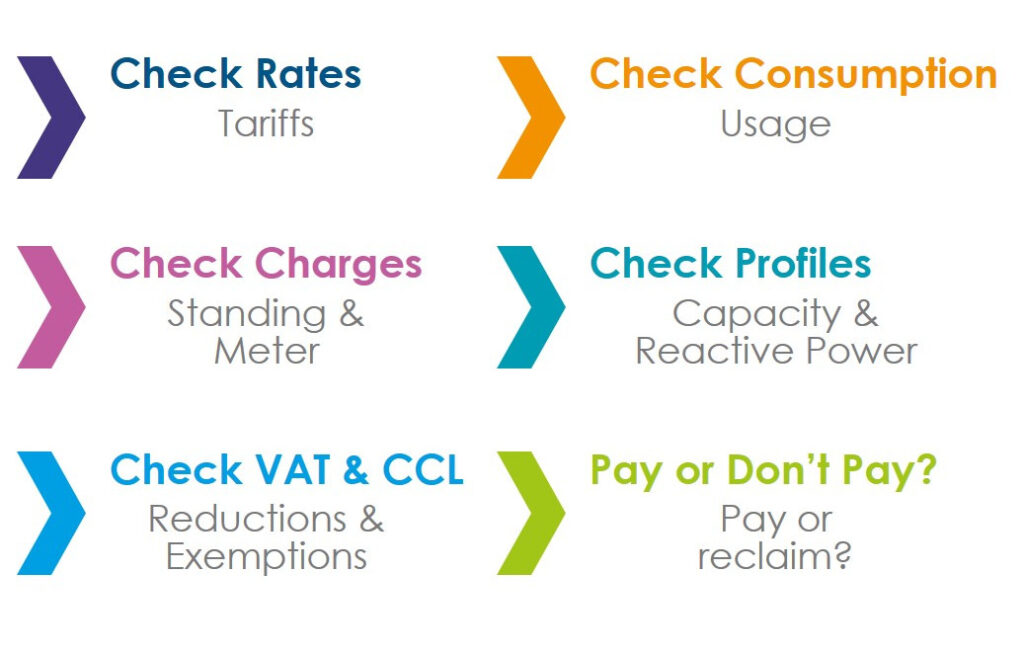
Approximately 7% of UK energy bills are inaccurate, and many of organisations have been overcharged for electricity and gas for extended periods. The EAG will check energy bills against actual consumption and against current contract terms and rates.
We Work With the following:
- Registered Charities
- Not-for-Profit
- Community Interest Companies (CIC)
- Charitable Incorporated Organisations (CIO)
If you think the VAT rates for your charity are incorrect, or you need help or information, one quick call to us is all it takes to ensure your organisation is paying the appropriate rates.
Click here for more information on our Bill Validation service.
Invoice Validation
Reducing Consumption
Energy Saving Solutions
It’s a fact that there have never been more techniques, technologies or services to help you reduce your energy consumption, thereby reducing your carbon footprint. The EAG has a wide range of options available. Contact us for more information, or check here:
Here’s a simple fact, the Carbon Trust estimates that most organizations can reduce their energy consumption by using smart meters and practising good-Housekeeping. What’s more, the savings accrue year after year.
Making sure all the site, meter, tariff and standing charges are correct is essential, but beyond that, it’s vital to make sure you are not wasting energy. Many buildings are using energy whilst they are empty, or only partially occupied. By matching demand with occupancy, it’s possible to achieve substantial savings.
Free Energy Audit
We will review all your current energy arrangements and make informed recommendations to improve your energy purchasing and energy efficiency.
We serve organisations from the following sectors. The more organisations that join, the more potential to increase Buying Power.
Arts & Culture Charities
- Museums & Art Galleries
- Historic Buildings
- Performing Arts
- Libraries & Historical Societies
- Public Broadcasting and Media
Education Charities
- Nurseries
- Academies
- Universities and Colleges
Environmental Charities
- Environmental Conservation & Protection
- Parks and Nature Centres
Health and Wellbeing Charities
- Hospices
- Patient and Family Support Charities
- Children’s Charities
- Elderly Care Charities
- Disease & Disorder Charities
- Medical Services & Treatment
- Medical Research Charities
- Carer Support Charities
Animal Charities
- Wildlife Conservation Organizations
- Pet and Animal Welfare Organisations
- Hunting & Fishing Conservation Groups
- Zoos and Aquariums
Sports & Recreational Clubs
If you run a Sports & Recreational group on behalf of the local community and feel you may qualify for VAT reduction, but do not see your organisation type on the list below, then please arrange a call to our support team today.
- Sports Clubs
- Community Fitness Centres
- Arts & Crafts Club
- Community Gyms
- Women’s Institute
- Bowling Clubs
- Drama Clubs
- Freemasons
- Singing & Choir Clubs
- Scout & Girlguiding
Community Centres & Hubs
If you run an organisation on behalf of your local community and think you may be eligible but do not see your organisation type on the list below, then please arrange a call to our support team today.
- Leisure Centres
- Village Hall
- Youth Clubs
- Community Centre
- Community Cooperatives
- Free school or academy
- Libraries
- Care home
- Religious Groups
- Student accommodation
- Community Focused Groups
- Monastery / Nunnery
- Churches
- Free school or academy
- Housing and Homeless
- Other Non-profit